

Now that autumn is here, and a few months have passed since our last update on the Peregrine Falcons at our various nest sites, we wanted to look back at the 2026 nesting season and share the latest news about this year’s fledglings.
 Adam L Wicks
Norwich Cathedral
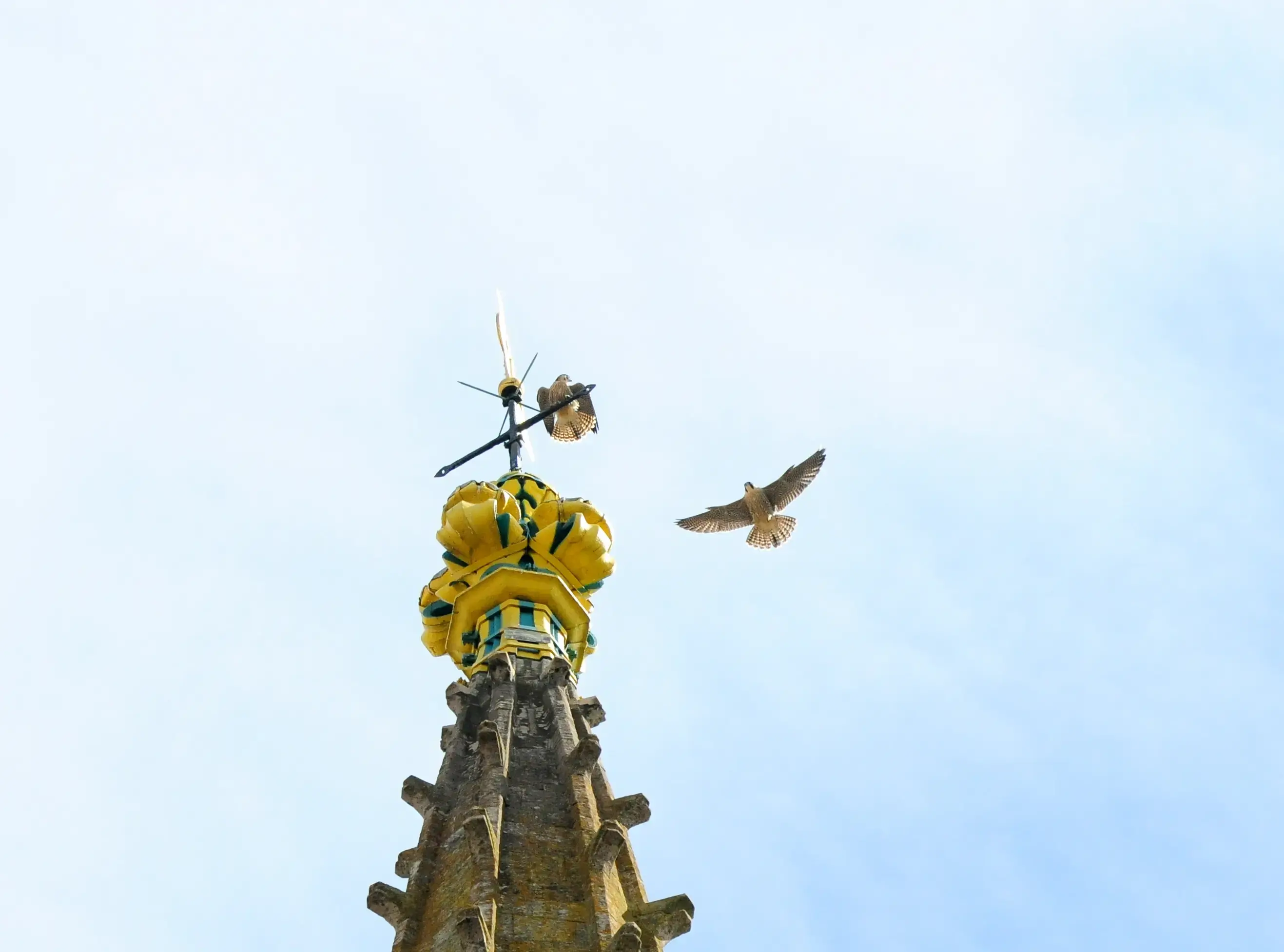
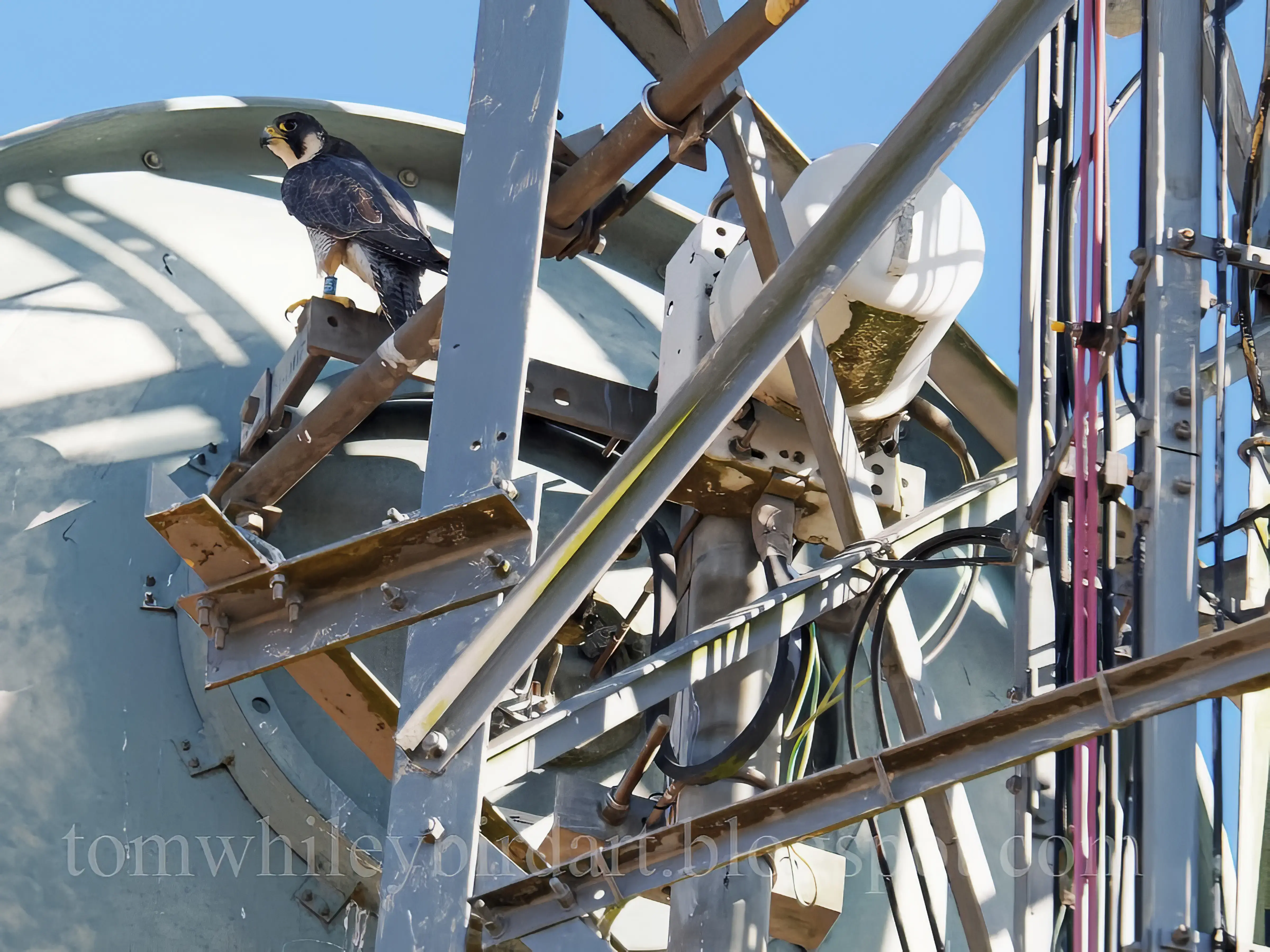
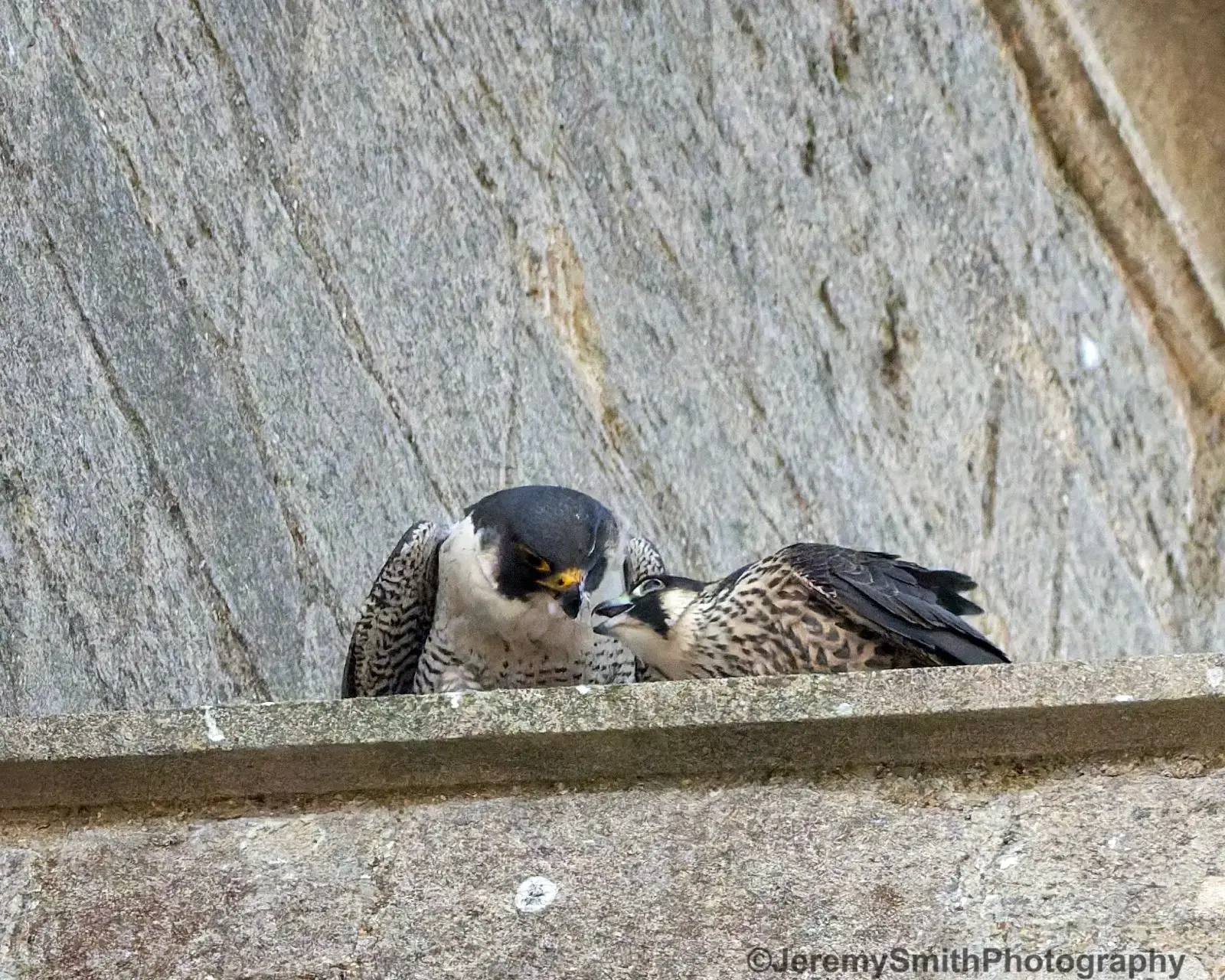
The Peregrine Falcon pair nesting at Norwich Cathedral laid four eggs this year, which began to hatch in early May. One egg did not hatch, and one chick died soon after hatching, but the two surviving chicks went from strength to strength. Both were ringed in May and were initially determined to be females (PA and PB). The two juveniles fledged in mid-June. PA fledged first, with a nudge from PB, who appeared to be the stronger of the two. Both remained very active and vocal around the cathedral for the next few months while they learnt to hunt and continued to be fed by the adult pair.
Unfortunately, one of the juveniles, PA, was found injured by a member of the public and taken to Suffolk Owl Sanctuary’s Raptor Hospital in late August. PA later died from the injuries sustained. A post-mortem examination confirmed the suspected cause: PA had struck a window. This was very sad news, although such incidents are unfortunately not uncommon. The examination also confirmed that PA was male, rather than female as we had initially thought. We were very happy to hear that the other juvenile, PB, had been spotted over Cley, but we do not know where she went after that.
One of last year’s juveniles (MB) had been spotted only 25 miles away from Norwich Cathedral in Bodham in August of this year. This was exciting news for us here at the Trust as it is always fantastic to see where previous fledglings have ended up, in this case not very far.
 T Whiley
 Jeremy Smith
Ely Cathedral
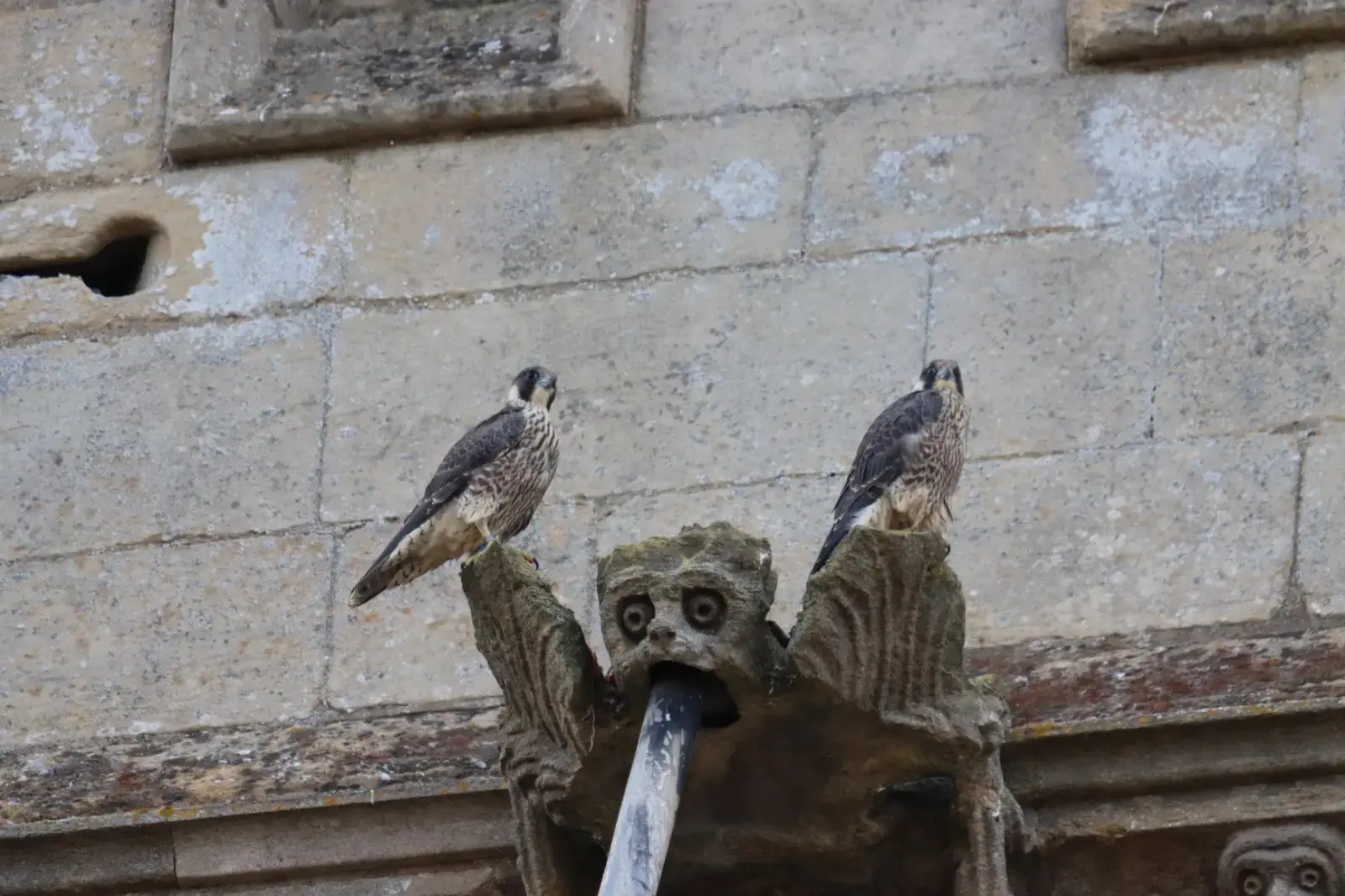
Four eggs were laid at Ely this year, which was wonderful to see after several years of uncertainty at the site. Three of the four eggs hatched in early May. The chicks were ringed at the end of May, when it was determined that there was one male and two females (PK, PL and PM). The three chicks spent a great deal of time exploring the tower before finally fledging in mid-June. They remained at the cathedral for several months after fledging, but their visits gradually became less frequent. At this point, we have no further updates on the three fledglings’ whereabouts.
 Steve Sharpe
Kettering St Peter and St Paul’s Church
The Kettering pair continued their successful streak by laying four eggs again this year. All four hatched in early May, and the chicks were ringed in late May (MC, MD, MK and ML). Three of the chicks were determined to be female and one to be male. All four fledged successfully and thrived in the grounds around the church. The juveniles gradually dispersed over the following months, and by the time our Conservation Officers visited to check the box, only the adult pair remained. At this point, we have no further updates on how the four fledglings are doing.
Yeovil
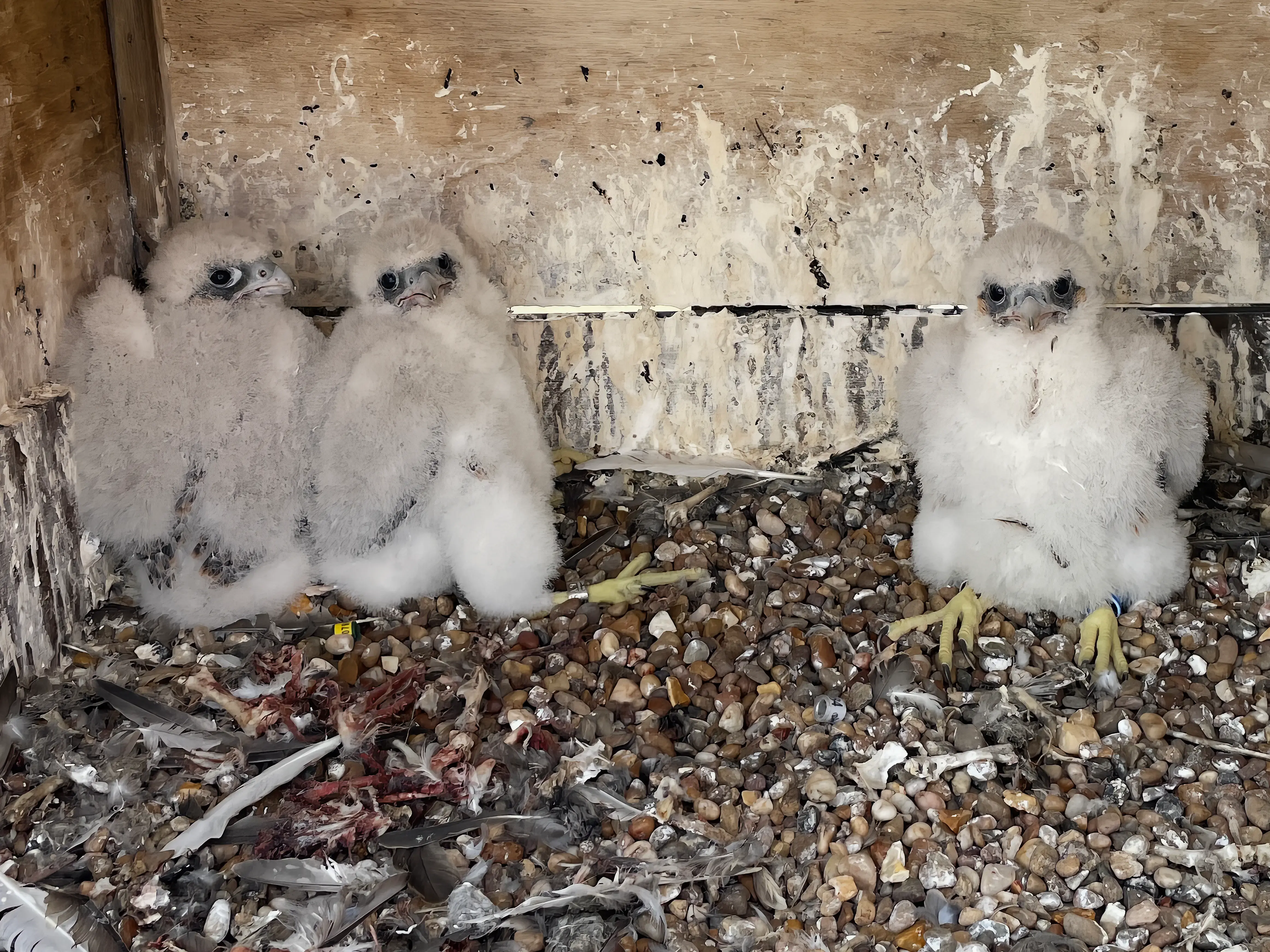
The Yeovil pair laid three eggs in late March, the same number for the third year in a row. All three eggs hatched in late April. The chicks (KR, KM and KP) were ringed in May by the Hawk and Owl Trust under licence, as is the case at all the sites we monitor. Based on their weight at the time, the three chicks were estimated to be males (tiercels); however, this cannot be established without further testing, but unfortunately due to time constraints on site the decision was taken not to DNA swab on this occasion. All three chicks fledged and were reportedly doing well. At this point, we have no further updates.
Bath St John’s
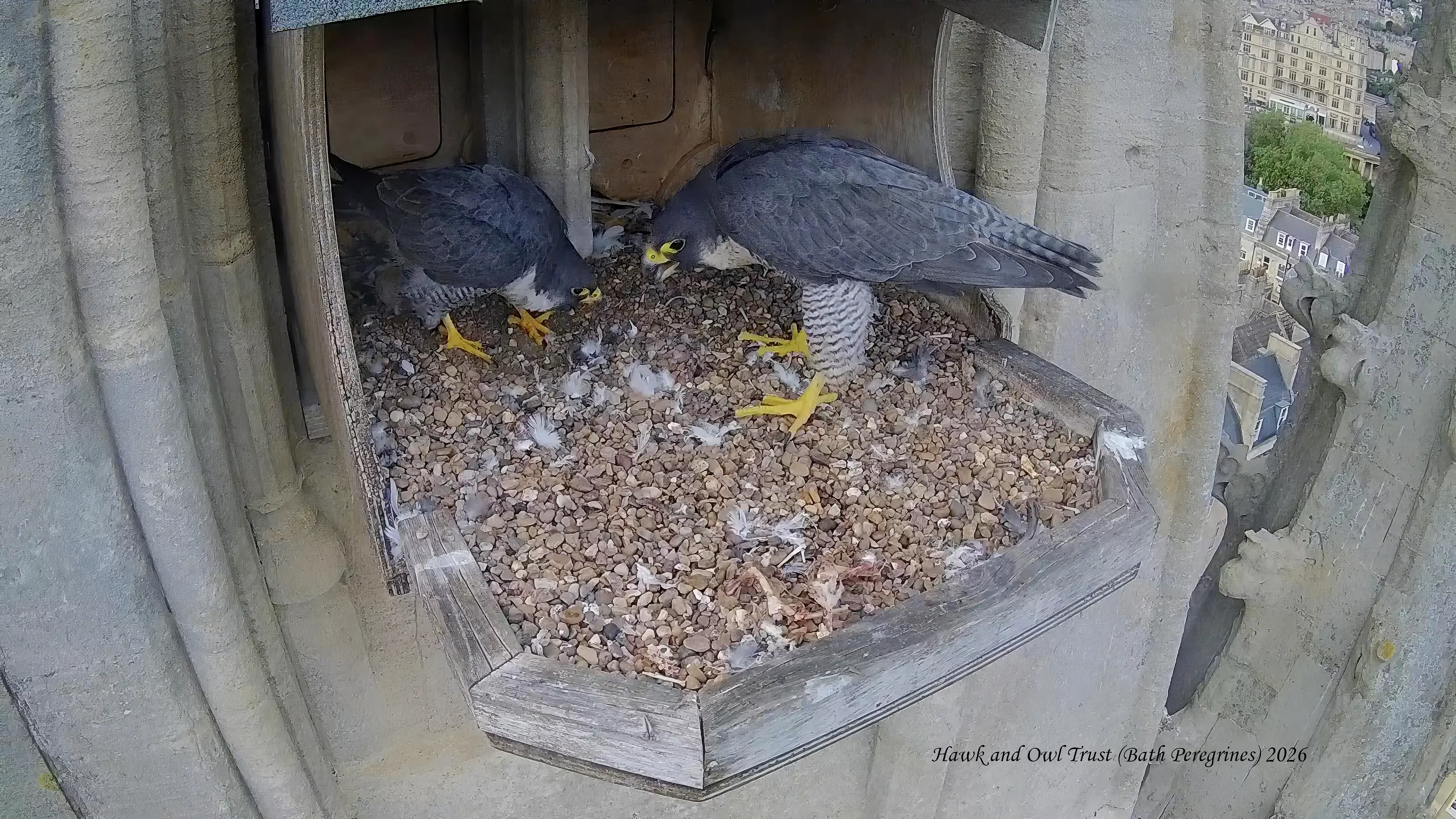
For a second year in a row the Bath Peregrine pair were unsuccessful and this year the falcon did not lay any eggs. In previous years this pair have been very successful and typically laid four eggs each year. The female came to Bath in 2014 making her at least fifteen years of age and successfully fledged 34 young to 2024. The female had attempted to lay eggs in 2025 but seemed lethargic and uncomfortable and the eggs she did lay did not hatch. This year the female seemed content in seeing out the season at the nest site. Unfortunately, in September a new female (falcon) was seen in the area and a territorial battle ensued where the resident falcon was grounded and taken to a specialist vet where she was later euthanised. The new falcon (F-26) soon took up residence and began to assert her dominance. This falcon is not ringed, so we have no background information. Within a few weeks both the male and the new falcon could be seen on the camera chatting, landing prey, scraping and preening which are all positive signs that we may have a successful 2027 season at Bath.
 Gavin Bickerton Jones
Wymondham Abbey
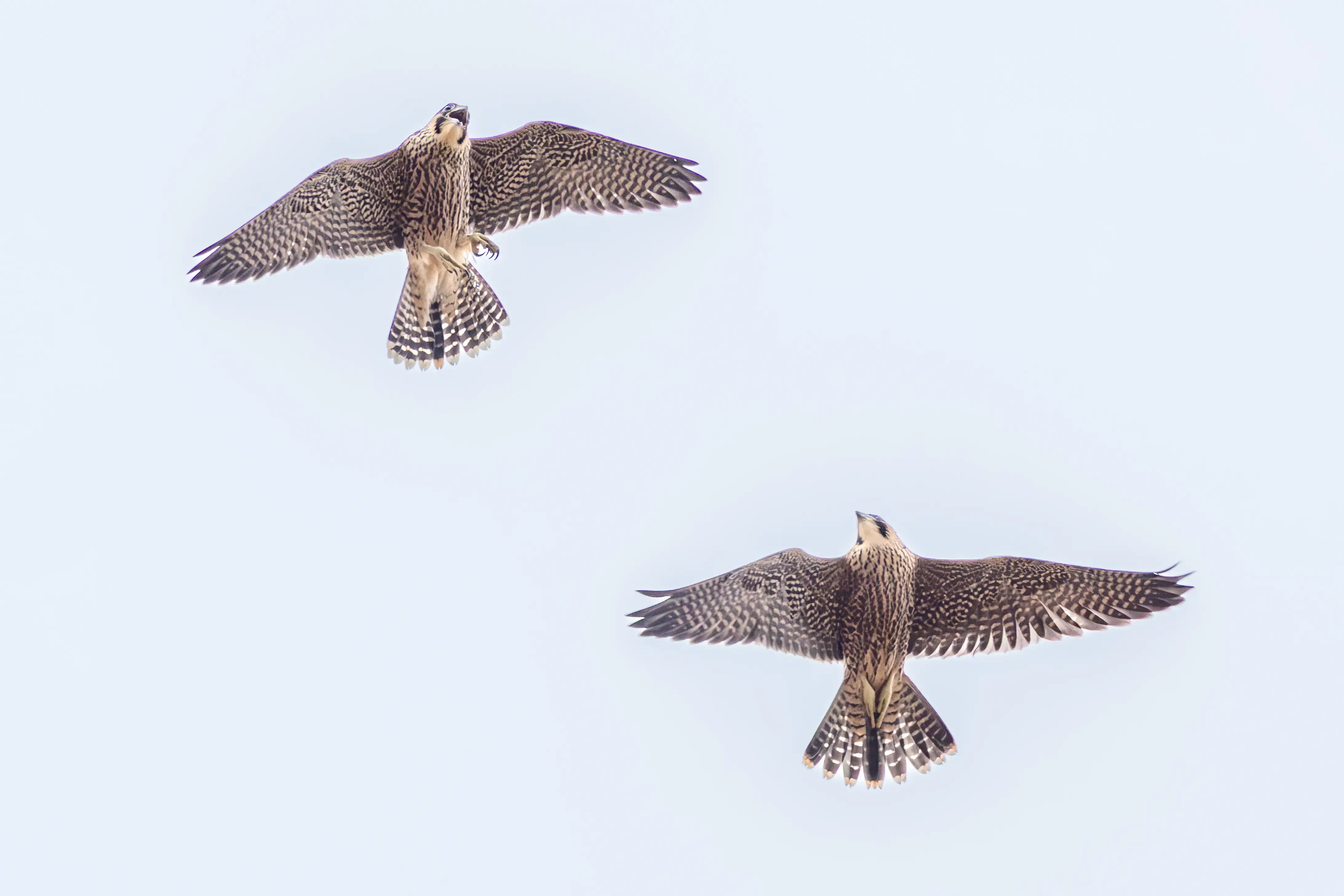
A Peregrine platform was installed by the Trust at Wymondham Abbey back in 2016. Over the years various Peregrine Falcons have been present at the Abbey but until this year a successful breeding pair had not been present. A pair was spotted early in the season by local residents; however, we did not have a working camera in the nest box so could not be sure they had bred successfully until two fully feathered “chicks” started peering over the edge of the box. Due to not knowing what was happening earlier in the season the pair were left undisturbed and the chicks were not ringed, however we were very excited to see them succeed this year, keeping an eye on their progress from a distance. Both chicks successfully fledged and could be seen around the Abbey grounds in the coming months. The sightings became less frequent and now it is just the adult pair present at the Abbey once again. We plan to restore the next box and camera over the autumn in readiness for the breeding season in the hopes for another successful year.